 TREE KING
Is my tree dying?
Tree Health & Diagnosis in Fulshear & Katy, TX
Thinning canopy, yellow leaves, mushrooms at the base? We find out what's wrong and what it takes to save the tree.
A mature shade tree is worth a lot — to your home's value, your cooling bill and your yard. When it starts looking sick, the sooner you know why, the better your chances of saving it.
We inspect the canopy, trunk, root flare and soil, look at how the site has changed (new construction, grade changes, drainage, irrigation), and give you a plain-English diagnosis and a treatment plan — or tell you honestly if the tree is past saving.
What we do
Tree inspections
Full visual assessment of canopy, trunk, roots and soil.
Disease & pest treatment
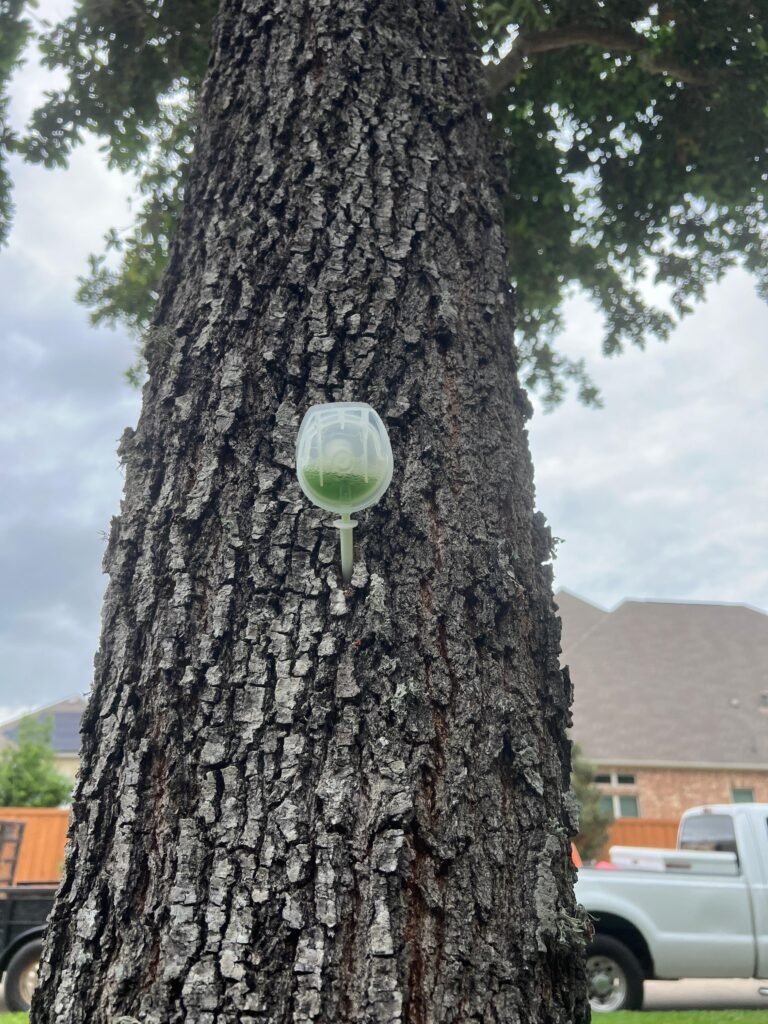
Targeted treatments, including trunk injections that go straight into the tree.
Hazard assessment
Is it safe to keep? We look for decay, cracks and root problems.
Soil & root care
Mulching, soil improvement and fixing root-zone problems.
Common tree problems around Fulshear and Katy
Oak wilt — a fungal disease that can kill live oaks and red oaks, spread by beetles and through connected roots. Hypoxylon canker — shows up on drought-stressed oaks and other hardwoods as bark sloughing off to reveal a gray-brown crust. Iron chlorosis — yellow leaves with green veins, common in our alkaline soils. Root and soil stress — compacted clay, construction damage, trees planted too deep or buried with mulch volcanoes.
Many of these look alike at first. Getting the diagnosis right is what makes treatment work.
Frequently asked questions
How do I know if my tree is dying?
Warning signs include large dead limbs, leaves that are small, yellow or drop early, bark falling off, mushrooms or conks on the trunk or roots, and cracks or cavities. Call us for an inspection — it's often not as bad as it looks.
What is trunk injection?
Medicine or nutrients are placed directly into the tree's vascular system through small ports in the trunk. Nothing is sprayed, and the treatment goes where it's needed.
Can you save a tree with oak wilt?
Early treatment can protect nearby healthy oaks and sometimes the infected tree. Speed matters — call as soon as you see sudden leaf loss or discolored veins on oak leaves.
Related services & areas
Ready to get started?
Call Tree King for an upfront, on-site estimate. We'll tell you exactly what your trees need — and what they don't.