 TREE KING
Tree care tips
When Is the Best Time to Trim Oak Trees in Texas?
Short answer: for oaks in Texas, the safest pruning window is roughly July through January. Here's why — and what to do if you can't wait.
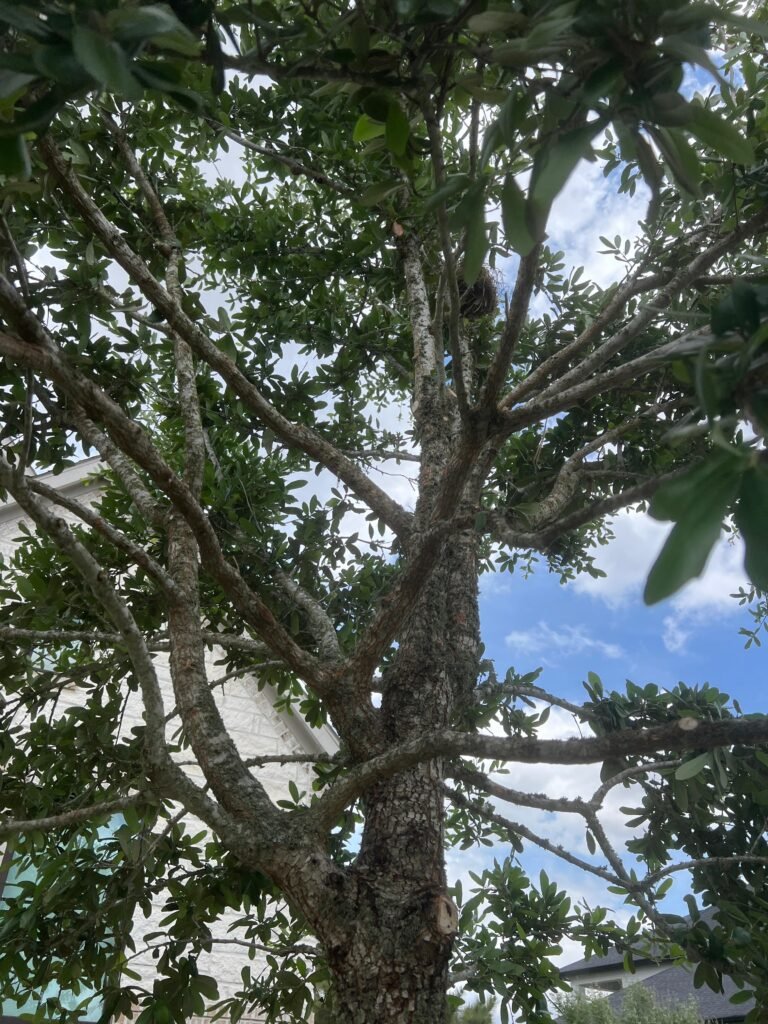
The reason: oak wilt
Oak wilt is a fungal disease that has killed huge numbers of live oaks and red oaks in Texas. One of the ways it spreads is through small sap-feeding beetles that are attracted to fresh wounds on oak trees — including pruning cuts. Those beetles, and the fungal mats they feed on, are most active in spring.
Texas A&M Forest Service recommends avoiding oak pruning from February through June when possible, and painting every fresh oak wound with wound dressing no matter what time of year it is.
What about other trees?
Most non-oak trees — pecans, elms, maples, pines, crape myrtles — can be pruned any time of year. Late winter, before spring growth, is often ideal because you can see the tree's structure without leaves. Avoid heavy pruning in the hottest, driest part of summer on stressed trees.
When you shouldn't wait
Dead, broken or hanging limbs over a house, driveway or play area should come down whenever you find them, oak or not. Storm damage can't wait until July. A professional will make clean cuts, paint oak wounds right away and keep the work to what's necessary.
Signs of oak wilt to watch for
Live oaks: leaves with yellow or brown veins, rapid leaf drop in spring or summer, and dying trees spreading outward in a circle. Red oaks (Shumard, Texas red oak): leaves turn dull green, then bronze or brown from the edges, and the tree can die in weeks. If you see this, call an arborist quickly — early treatment can protect nearby oaks. See tree health & diagnosis.
Need an oak trimmed the right way? See our trimming service or call 361-850-3643.
A simple oak pruning calendar for Texas
- July through January: the preferred window for routine oak pruning. The lowest-risk times are the hottest stretch of late summer and the coldest part of winter, when the beetles that carry oak wilt are least active.
- February through June: avoid routine pruning. This is when fungal mats form on infected red oaks and the sap beetles that spread the spores are most active.
- Any month: remove dead, broken or dangerous limbs when you find them, and paint the cuts right away.
Paint every oak cut, every time
On oaks, paint every fresh wound as soon as it is made, in any season and on any size of cut. The paint is not there to help the tree heal. It is there to keep sap beetles off the fresh wood for the first few days, which is when a wound can be infected. Ordinary latex paint or a pruning sealer both do the job. On most other trees, wound paint is not needed.
How oak wilt moves from tree to tree
There are two routes. Above ground, sap beetles carry spores from fungal mats on dying red oaks to fresh wounds on other oaks. Below ground, live oaks growing near each other share connected roots, and the fungus travels through those roots from one tree to the next. That is why oak wilt in live oaks shows up as a patch of dying trees that widens each year.
Firewood matters too. Wood from a red oak that died of oak wilt can carry fungal mats. Do not stack unseasoned oak firewood from an unknown source near your oaks.
How much to take off
A healthy mature oak rarely needs more than a quarter of its live canopy removed in one season, and usually much less. Good oak pruning takes out dead and broken wood, reduces weight on long limbs over the roof and gives clearance over the driveway and street. It does not top the tree or strip the inside of the limbs bare, which is called lion-tailing and leaves limbs weaker in wind.
Young live oaks are a different job
Builder-planted live oaks at new homes in Fulshear and Katy need small structural cuts in their first few years: one main leader, well-spaced limbs, and stakes and straps removed. The cuts are small, but the same timing and paint rules apply. See young live oak pruning and live oak pruning in Weston Lakes.
Common questions
Can I trim live oaks in the summer in Texas?
Yes. From July onward the risk of spreading oak wilt drops, and late summer is one of the lowest-risk times of the year. Paint every cut as soon as it is made.
Do I need to paint oak cuts in winter?
Yes. Paint fresh oak wounds in every season. It takes a minute and keeps sap beetles off the wood while the wound is fresh.
A limb is on my roof and it is April. Should I wait until July?
No. Dead, broken or hazardous limbs should come down when you find them. Make clean cuts, paint them immediately and keep the work to what is necessary until the safer window opens.
Ready to get started?
Call Tree King for an upfront, on-site estimate. We'll tell you exactly what your trees need — and what they don't.